

Plastic cutlery plays a significant role in the service processes of many restaurants and fast-food outlets. Nearly 100 million pieces of plastic cutlery are discarded every day in the United States alone. Globally, approximately 9,200 tons of plastic are produced annually. Single-use plastic cutlery accounts for a large portion of this, with an annual market value approaching $3 billion.
Despite its popularity, scientists have found that plastic cutlery has a significant negative impact on the environment. Learn more and how you can contribute to sustainable development.

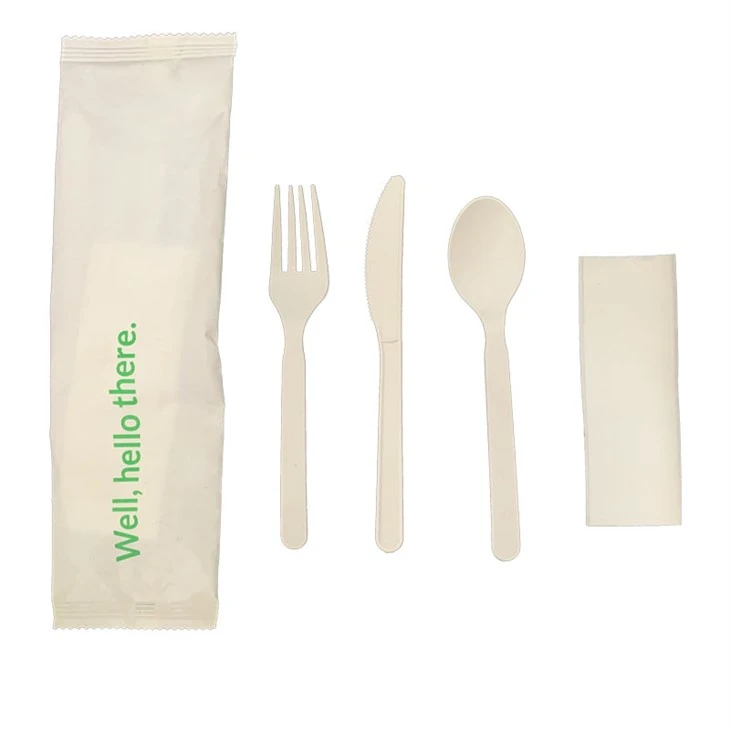
How Long Does Plastic Cutlery Take to Decompose?
Plastic cutlery can take hundreds of years to decompose in the natural environment.
In most standard landfills, no measures are taken to promote material degradation. The waste is piled up, compacted, and then left to decompose naturally in an oxygen-deficient environment. Even in landfills, plastic cutlery can take 200 to 450 years to completely decompose.
The Environmental Impact of Plastic Cutlery
The slow decomposition of plastic cutlery means it has a significant impact on the environment. Due to its difficulty in recycling and its ubiquitous availability, you'll find many single-use cutlery items discarded in landfills, oceans, and commonly polluted waterways.
Plastic cutlery is a major source of marine pollution, considered by environmentalists to be one of the deadliest sources of marine pollution for marine animals. When land or sea animals ingest plastic cutlery, it can become lodged in their throats and intestines, causing internal bleeding or suffocation.
What is the final destination of discarded plastic cutlery?
Unfortunately, most plastic cutlery is difficult to recycle for several reasons:
Their design and size make them difficult to process-many recycling plants refuse to accept plastic cutlery because they tend to fall through gaps in the machines.
Most single-use plastic cutlery is made from non-recyclable plastic.
Due to the inconsistent materials used in plastic
cutlery, it is difficult to distinguish between recyclable and non-recyclable plastic types.
Their shape also makes packaging difficult.
Because of these challenges, most plastic cutlery ends up in landfills. Even plastic cutlery sent to recycling plants is often separated from the batch and ultimately sent to landfills. While there are some specialized recyclers, plastic cutlery accounts for only a tiny fraction of the 9% of recyclable plastic waste.
Sustainable Alternatives to Plastic Cutlery
Research shows that only about 2% of disposable cutlery currently in use is biodegradable, compostable, or otherwise sustainable. However, there are many excellent biodegradable alternatives, including compostable cutlery.
There are three main options for switching from disposable plastic cutlery:
Biodegradable alternatives: Users can compost paper, agave fiber, and disposable wooden cutlery after use.
Reusable options: Some reusable items, such as metal cutlery, can be washed indefinitely.
Reusable and recyclable options: Agave-plastic blends and similar washable items can be reused but ultimately need to be recycled.