


Compostable straws are made from natural plant material, such as plant fiber or Corn PLA. Corn PLA is a plastic-like material made from Corn, so it can be composted in commercial facilities. Paper straws are made from uncoated paper.
Benefits of Compostable Straw
No microplastics issue
After plastic enters the environment, it will gradually become brittle, degrade and break down in the sunlight. These broken plastics will turn into microplastics and reach every corner in the world through the water cycle, including rivers, lakes, and the oceans. Accumulated in the body of animals in these environments, the microplastics will eventually be swallowed by people along with fish, shrimp, and shellfish. Hazardous substances (e.g. heavy metals) can easily adhere to these microplastics, and this gives them the chance to enter and damage the body. By contrast, compostable straws can be naturally decomposed in the environment instead of becoming microplastics and getting in the body
Reduction of the volume of marine waste
In accordance with the statistics made by the International Union for Conservation of Nature and Natural Resources (IUCN), at least 14 million tons of plastic enter the ocean each year, accounting 80% of all marine waste. Most of these plastics are unproperly disposed waste from the land that entered the ocean through rivers or groundwater. They can harm marine animals by swallowing, suffocation and entanglement. Hence, the use of compostable straws can reduce the volume of marine waste as well as the negative impact on marine ecosystems caused by people.
Safe and non-toxic
Compostable straws are mostly made of plant-based materials, so they hardly generate toxic substances. On the contrary, plastic straws may contain chemical additives such as heat stabilizers, ultraviolet stabilizers, colorants and plasticizers during the manufacturing process, and these could be released due to abrasion, temperature changes or erosion of acid drinks when using the straws. At present, it is uncertain if these substances will harm the body over time, so compostable straws would be a safer choice.
Reduction of greenhouse gases (GHG) emissions
The source of plastic is petrochemical raw materials. First of all, crude oil needs to be transported from oil-producing countries to other countries across the ocean. After it is thermally fractionated and cracked in local processing plants, the plastic materials generated will be delivered to plastics manufacturing factories and then made into all kinds of plastic. This transportation and manufacturing process will produce large amounts of greenhouse gases (GHG). The Organisation for Economic Co-operation and Development (OECD) pointed out that in 2019, 18 billion tons of GHG were generated from plastics, which was 3.4% of the total GHG emitted globally. It is expected that 43 billion tons – more than twice the number at present – of GHG will be produced from plastics in 2060. This will further cause climate change. By using compostable straws, the demand for plastic can be reduced and further resulting in the decrease of GHG emissions.
Reduction of volume of waste
The issue of waste is facing every country around the world. Most waste enters landfills or incinerators and then causes soil, water, and air pollution during the handling process of decomposition or burning. Therefore, both facilities are NIMBY (not-in-my-backyard) for local residents. According to the OECD's statistics, the recovery rate of global plastic waste only reaches 9%. Furthermore, small single-use plastic straws are almost impossible to recycle for reuse. As a result, compostable straws can help reduce the amount of waste and further mitigate the global waste problem.
Safety and hygiene
Besides compostable straws, one can also use reusable straws that can be recycled and made into other products, or cut the use of straws and drink from the cup directly. However, as reusable straws are made of stainless steel or glass, there might be safety concerns while carrying or using them, and they need to be cleaned properly to ensure good hygiene. Additionally, in special situations where drinking from a cup is not ideal, such as driving, exercising, or in hospitals, the use of compostable straws can ensure safety and convenience.
-
![Compostable PLA Straw]() Compostable PLA StrawSize:196cm or customizedColor:White or CustomizedMaterial:cpla materialread more
Compostable PLA StrawSize:196cm or customizedColor:White or CustomizedMaterial:cpla materialread more -
![100% Biodegradable Drinking Straws]() 100% Biodegradable Drinking StrawsSize:196cm or customizedColor:White or CustomizedMaterial:cpla materialread more
100% Biodegradable Drinking StrawsSize:196cm or customizedColor:White or CustomizedMaterial:cpla materialread more


Why Choose us
Rich Experience
Our company has many years of production work experience. The concept of customer-oriented and win-win cooperation makes the company more mature and stronger.
High Quality
Our products are manufactured or executed to very high standards, using the finest materials and manufacturing processes.
One-stop Solution
With rich experience and one-to-one service,we can help you choose products and answer technical questions.
Competitive Price
We have professional sourcing team and cost accounting team, stive to reduce cost and profit and provide you a good price.
7 Best Biodegradable Compostable Straws Made From Plants


Biodegradable Compostable Straws Made From Grass
Many manufacturers use sedge grass to create environmentally friendly compostable straw. Experienced farmers expertly pick, wash, dry, cut, and shape the grass. They formulate these pieces of grass into thick and durable straws.
Eco-friendly Compostable Rice Drinking Compostable Straw
The rice straws are a result of the combination of two ingredients: rice flour and tapioca starch. Manufacturers mix these compostable straw materials with water to form their structure. The eye-catching colors of these natural compostable straws are a result of natural vegetable and fruit juices.
Similarly to coconut straws, rice straws are biodegradable and safe to eat. Users can even boil the straws in hot water to create family-favorite rice-based dishes. If that's not your cup of tea, throw them into your compost bin for a rapid and eco-friendly means of disposal. These organic straws will decompose naturally and rapidly, and as they contain zero traces of plastic, they thankfully won't release toxins into the soil.
Compostable Straws Made From Sugarcane
Sugarcane compostable straws are made of a type of biodegradable waste, extracted from sugarcane trees, also known as ‘sugarcane bagasse'. This fibrous material is extremely sturdy and versatile. During production, manufacturers extract all juice from the bagasse before cutting and shaping them into drinking straw shapes. Another winning advantage to these sugarcane straws? They even spice up (or should we say sweeten?) your favorite drinks by adding a natural sweetness!
Coffee Compostable Straws Made From Coffee Grains
Coffee straws are ethically made out of a common household or business ingredient: ground coffee. Manufacturers are pioneering the movement to take full advantage of recycled waste, including leftover ground coffee beans. This plastic-free material is non-toxic and compostable, preserving not only your own bodily health, but also considering sustaining the beauty and liveliness of our environment.
Compostable Coconut Straws
These not-paper biodegradable straws are made of fermented coconut water. The production process during manufacturing is complex and lengthy, including steps of heating, steaming, drying, hardening, all before finally shaping the material to resemble drinking straws. Thirst quenchers have no need to beware! Satisfy your cravings with your most loved drinks with coconut straws that are 100% tasteless and scentless.
Reusable Compostable Bamboo Straws
Bamboo is prevalent among the eco-conscious market as one of the most common materials used to make biodegradable straw. The fibers of the bamboo are of a naturally tubular shape, which is convenient to construct straws. This material also has high flexibility and durability, and won't snap easily during prolonged use. Due to this, they also sustain their form and their function for long periods of time in both hot and cold drinks. Bamboo compostable straws place a crowning cherry on top when proving their reusability- once you have finished using them, then can simply be thrown into your garden or compost bin!
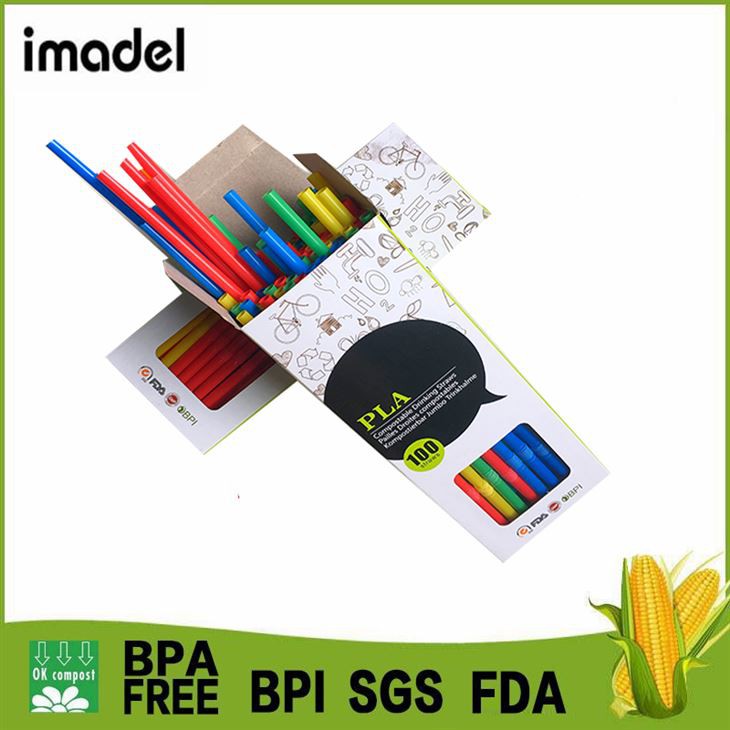
PLA Straws Made of Corn Starch
Corn starch is widely accepted as an effective material for making plastic-alternative products. This material is ideal to create polylactic acid, otherwise known as PLA. PLA is plant-based but is accompanied by the convenient features of plastic. PLA straws may be considered thermoplastic products, however, they contain far fewer toxic substances and chemicals than traditional polypropylene plastics do.
Once the straws are discarded, the present PLA can take up to 80 years to degrade back into the earth. This number may seem shockingly higher than the decomposition lifespan of other aforementioned biodegradable straw alternatives. However, they can still be considered as part of the movement to reduce plastic waste levels, as this timeline is much shorter compared to the decade-long decomposition duration of traditional plastics.
Compostable straws are made from materials that can break down naturally in the environment. The breakdown process of these compostable straws usually involves microorganisms breaking them down into smaller pieces over time. However, several factors can affect the rate at which they decompose, such as temperature and moisture levels.
Compostable straws can be composted along with other organic waste and should not be thrown in traditional recycling or general waste bins.
When it comes to disposing of biodegradable straws, composting is a suitable method. Some companies claim that PLA-based straws can be added to organic waste and left to decompose along with other food scraps. However not in all countries are waste companies able to facilitate this because PLA could slow down the decomposing process.
Another option is industrial composting facilities that use controlled conditions to speed up decomposition rates for larger quantities of biodegradable materials. But also here, when you add PLA to organic waste, the organic waste decomposes much faster than PLA. It's definitely important not to throw PLA in traditional recycling bins or general waste bins as this could contaminate existing plastic streams and complicate the recycling process further.
Types of Compostable Straws
Paper compostable straws
The manufacturing process of compostable straws involves using food-grade materials and adhesives to create a durable and safe product. Paper straws are designed to withstand liquids for several hours, making them suitable for use in various settings, including restaurants, bars, and cafes. However, the shelf life of paper straws is generally shorter compared to plastic ones due to their paper nature. Most paper straws don't last more than 20 minutes.
Disposal methods for paper straws include composting or recycling. Composting can be done at home or by local waste management facilities that have commercial composting systems. Recycling requires separating the paper from any leftover liquid before placing it in a designated recycling bin. Proper disposal ensures that these sustainable alternatives do not end up contributing to environmental pollution but rather decompose naturally without causing harm to wildlife or ecosystems.
Reed straws
Sourcing and sustainability are key factors when it comes to choosing a compostable straw option. Reed straws are a great choice as they are renewable, organic and biodegradable. They also do not produce any harmful chemicals or by-products during the manufacturing process.
Cleaning and maintenance of reed straws is also very easy compared to other options such as paper or metal straws. Simply rinse them with warm water after use and they can be reused multiple times before being composted at the end of their life cycle. However for our reed straws, we advice to use them as a single use item because of hygiene reasons.
Price comparison with other options shows that reed straws may initially cost more than plastic alternatives but in the long run, they are actually more cost-effective because they last longer than paper straws AND improve your drink presentation. Reed straws make your drinks look elegant and sustainable! Plus, investing in sustainably sourced products supports environmentally conscious practices while helping reduce waste in landfills.
Wheat straws
Wheat compostable straws are gaining popularity as a biodegradable and sustainable alternative to plastic straws.
Here's what you need to know about wheat straws:
Suitability for different beverages: Wheat straws are suitable for hot and cold drinks such as smoothies, cocktails, iced tea or coffee.
Composting potential: One of the biggest advantages of using wheat straw is its ability to break down naturally after use. This means that it can be composted along with other organic waste without harming the environment.
Availability in various countries: Wheat is grown in many parts of the world including Europe, North America, Asia and Australia; therefore there is no shortage when it comes to supply.
Although wheat straws are 100% plasticless, one disadvantage is that they are not flexible meaning you can't bend them like some plastic straws. But by choosing wheat straws over plastic ones users contribute positively towards protecting our planet while still enjoying their favourite drink without any guilt.
Picking Your Compostable Straw: Things To Consider
Beverages You Like
Some types of compostable straws only work with cold drinks, so consider this when purchasing. If you need or want to use a straw with hot beverages, you'll need a straw that won't get too warm when placed in a hot drink.
01
Size
How long do you like your compostable straw to be? Do you need a wider circumference so you can drink smoothies or other thick beverages? Take these needs into consideration when choosing a straw size.
02
Material
Our mouths are sensitive places! So, think about the material that feels best on your lips and tongue. We call this “mouth feel.”
03
End Of Life
The point of choosing a reusable is so less waste is created. So, make sure your compostable straws' “end-of-life” (what happens when you're done using it) is truly better. Finding items that are biodegradable, compostable, and recyclable are best.
04
Our Factory
Shengzhou Imadel Trade Co.,Ltd was founded in 2012,is a company specializing in supplying 100% biodegradable and compostable products: CPLA cutlery; Sugarcane plate, bowl and clamshell; bags; paper cup; bamboo cutlery and plate.
FDA,SGS certified for food safty, BPI and EN13432 certified for compost.
And our factory, Zhejiang Imadel Bio-Tech Co.,Ltd is specially in producing the 100% biodegradable and compostable CPLA cutlery.
Our main market is North America, South America, and Europe.

Our Certificate


FAQ
Q: How long will a biodegradable straw degrade in natural environments?
Q: What is the best way to dispose biodegradable straws?
Q: What is the difference between biodegradable straws and compostable straws?
Q: Are biodegradable straws good to use?
Q: What can you do with compostable straws?
Q: Can you eat compostable straws?
Q: Do compostable straws feel like plastic?
Q: What are some facts about biodegradable straws?
Q: Does Starbucks use compostable straws?
Q: Are compostable straws actually compostable?
Q: How long does it take compostable straws to compost?
Q: Are McDonald's paper straws compostable?
Q: Are compostable straws better than paper straws?
Q: Are compostable straws better than paper straws?
Q: How do biodegradable straws work?
Q: Is there a difference between biodegradable and compostable?
Q: Why is compostable better than biodegradable?
Q: Can you recycle compostable straws?
Q: Are bamboo straws compostable?
Q: Are biodegradable straws more expensive than plastic?
Welcome to wholesale high quality compostable straw at competitive price from professional compostable straw manufacturers and suppliers in China here. For more information, contact our factory.